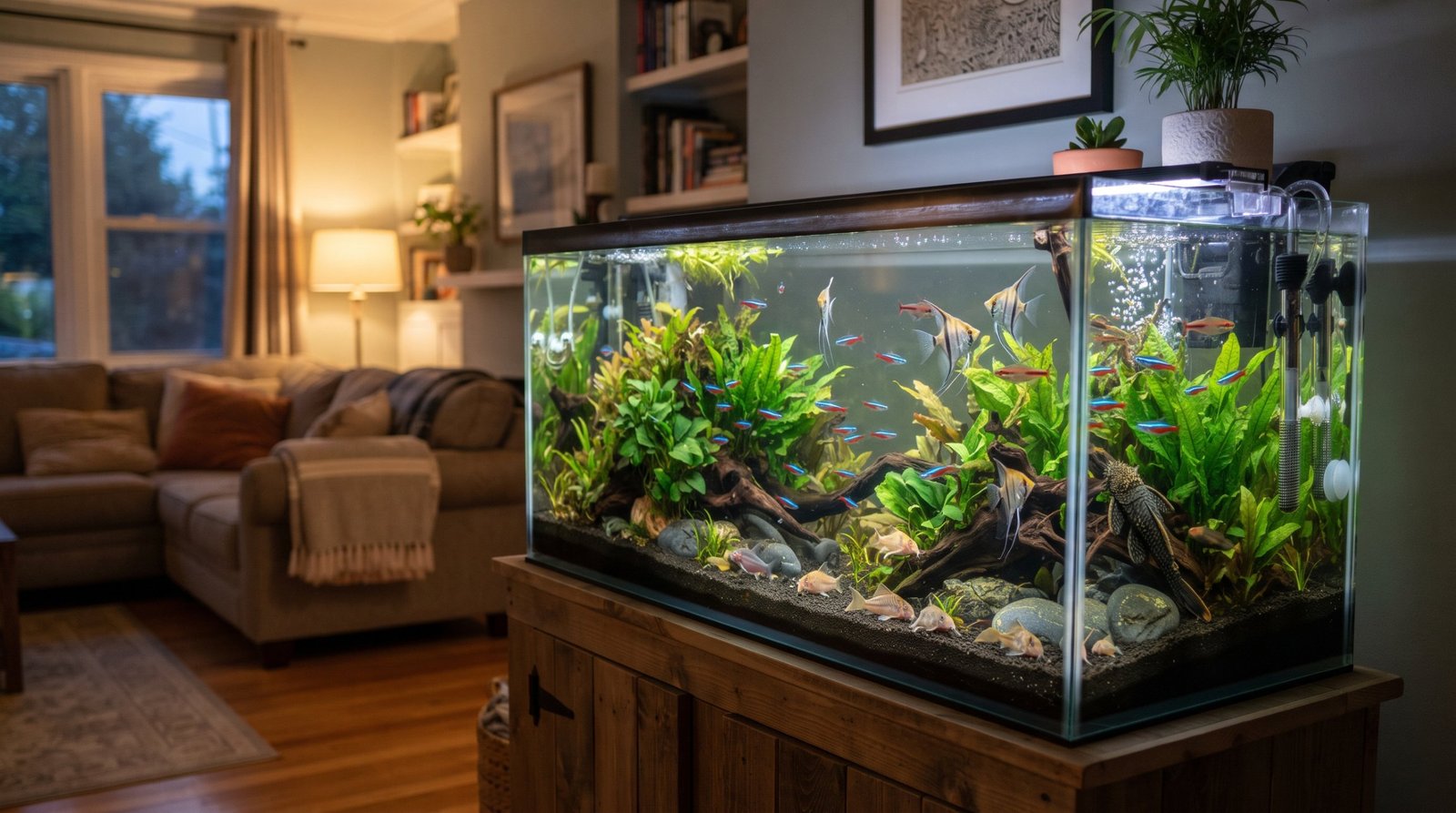
Water changes are the single most important maintenance task in fishkeeping — yet most beginners do them wrong. Here’s the complete, correct method.
Why Water Changes Matter
Even with a good filter, your aquarium accumulates nitrates, dissolved organics, and other compounds that no filter can remove. Water changes physically remove these pollutants and replenish essential minerals that fish absorb over time.
Skipping water changes leads to:
- Nitrate buildup (stresses fish, causes algae blooms)
- pH crash (acid water from CO₂ and organic acids)
- Depleted minerals (affects fish osmoregulation)
- Increased disease susceptibility
What You’ll Need
- Gravel vacuum / siphon
- Clean bucket (dedicated — never use a soap bucket)
- Water conditioner / dechlorinator
- Thermometer
Python No Spill Gravel Vacuum — Check Price
As an Amazon Associate, ClearWaterTank earns from qualifying purchases.
Step-by-Step: How to Do a Water Change
Turn off heater and filter
Heaters can crack if exposed to air mid-change. Turning the filter off avoids it sucking air when the water level drops. You can leave it on if you’re quick, but off is safer.
Vacuum the substrate
Push the gravel vacuum into the substrate and let it suck up debris as water drains into your bucket. Work in sections, overlapping slightly. Don’t vacuum every inch every week — rotate zones so you don’t destroy your beneficial bacteria bed.
Remove 25–30% of the water
For a 20-gallon tank, that’s about 5–6 gallons. Use a measuring bucket or mark your bucket in advance. Don’t change more than 50% at once — large water changes shock fish by suddenly altering water chemistry.
Treat the new water
Fill your bucket with tap water at roughly the same temperature as your tank (within 2°F). Add your dechlorinator per the bottle directions — typically 1 tsp per 10 gallons. This neutralizes chlorine and chloramine instantly.
Add water slowly
Pour the treated water in gently — against the glass or onto a plate placed on the substrate — to avoid disturbing fish and stirring up debris. Turn your heater and filter back on.
How Often Should You Do Water Changes?
| Tank Type | Frequency | Amount |
|---|---|---|
| Lightly stocked community | Weekly | 25% |
| Heavily stocked / cichlids | Twice weekly | 25–30% |
| Planted tank (low nutrients) | Every 2 weeks | 30% |
| New cycling tank | Every 2–3 days | 30–50% |
Best Water Conditioners
Seachem Prime is the gold standard — it dechlorinates and also detoxifies ammonia and nitrite in emergencies, buying you time during a water quality crisis.
Seachem Prime — Check Price on Amazon
As an Amazon Associate, ClearWaterTank earns from qualifying purchases.
Common Water Change Mistakes
- Using cold tap water — temperature shock stresses fish. Always match the temperature.
- Changing too much at once — a 100% water change can crash your cycle and kill fish.
- Forgetting dechlorinator — chlorine kills beneficial bacteria and can harm fish directly.
- Vacuuming the same spot every week — you’ll disrupt the bacteria bed. Rotate zones.
- Skipping weeks — nitrates compound fast; missed changes are hard to recover from.